


A playoff rematch gets things underway on September 8.

Thu, May 16
6:00AM EDT
Amundi German Masters - Rd 1
Golf Channel


Thu, May 16
12:00PM EDT
Indy 500: Practice 4
Peacock


Top Headlines


Derby-winner Mystik Dan is now the Favorite for the second jewel of horse racing’s Triple Crown.

Scottie Scheffler may be the favorite at this week’s PGA Championship, but the emphasis at Valhalla on precise play opens up the chance for any star to catch fire.
WATCH NOW
PL Update: Manchester United best Newcastle
Paul Burmeister, Robbie Earle, and Tim Howard analyze Manchester United's impressive 3-2 win over Newcastle at Old Trafford, and reflect on Chelsea's nervous 2-1 win over Brighton at the Amex.
Up Next


NBC Sports Podcasts
-
 Robbie Mustoe and Robbie Earle discuss and dissect the top Premier League storylines after every single matchweek.
 -
 15x AMA Champion Ricky Carmichael and 9x AMA Champion Ryan Villopoto recap the week in Supercross and Motocross racing.
 -
 The former QB gives his unfiltered analysis on all things NFL. Clap it up!
 -
 The Rotoworld crew has you covered with top-notch fantasy baseball analysis, waiver wire pickups, latest injury news and more.
 -
 From spreads and totals to futures and player props, Jay Croucher and Drew Dinsick have you covered.
 -
 The expert analysts of NASCAR on NBC take a deep, insightful dive into every Cup race.
 -
 Former college basketball players Meghan McKeown, Zora Stephenson, and Robbie Hummel take charge with Big Ten hoops insights.
 -
 Join Matthew Berry and the crew for the latest information on the NFL and fantasy football.
 -
 RotoPat, Denny Carter, Kyle Dvorchak and others from the Rotoworld crew give their analysis and opinions on all things NFL.
2024 NFL schedule
A playoff rematch gets things underway on September 8.

All the latest information on schedule and matchups for the 2024 NFL season.

Green Bay will be added to the traditional hosts of Detroit and Dallas for Thanksgiving in 2024.

Last year, the Raiders and Chiefs got together on Christmas Day in Kansas City.

The Caleb Williams era is set to get underway at Soldier Field on September 8.

Amazon Prime announced its 16-game regular-season schedule.

The 2024 Monday Night Football slate will feature several teams twice, with the last Monday game of the season being a rematch of the 2023 NFC Championship Game.
NFL

Odell Beckham is playing for his fourth team in four years.

Get ready to see plenty of Lions football in 2024.

Once again, NFL Network will have a late-season Saturday triple-header.

Monday Night Football debuted on ABC in 1970 and remained there until 2006.


Rotoworld

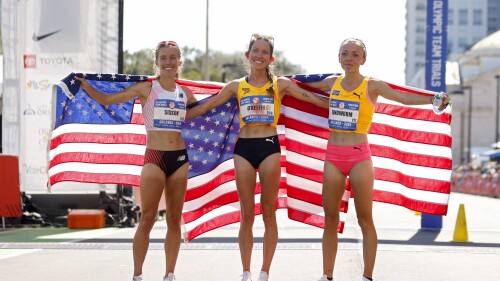
Matthew Pouliot takes a look at Statcast’s Squared-up Rate and which MLB hitters stand out.

Eric Samulski breaks down three pitchers who are throwing new pitches to see if we should care.


Where do the young Trail Blazers go after a last-place finish in the Western Conference, and how should fantasy managers approach the team in 2024-25?

Pat Daugherty and Denny Carter wade through the Denver Broncos’ backfield — including Javonte Williams, Samaje Perine and Jaleel McLaughlin — and highlight which running backs to zoom in on.
Premier League

Will Manchester City complete its quest for an unprecedented fourth-straight title?

Will Erling Haaland hold on to claim another Premier League Golden Boot? He’s got a six-goal advantage on Cole Palmer late in the season.

Manchester United manager Erik ten Hag praises his side’s performance and the team’s fans following a 3-2 win over Newcastle at Old Trafford.

Newcastle manager Eddie Howe doesn’t hold back his thoughts on VAR following Newcastle’s 3-2 loss to Manchester United at Old Trafford.
Premier League: The Run In

A look at the remaining schedule for Arsenal, Liverpool and Manchester City as the title race goes down to the wire.
Will Manchester City complete its quest for an unprecedented fourth-straight title?

Check out the Premier League fixtures and results for the 2023-24 season

The Premier League title race is going down to the final day of the 2023-24 season.

Jurgen Klopp targets best finish possible and gets a little introspective.

Matchweek 36 of the Premier League sees upset bids, title ramifications, and great escape hopefuls.

“It’s an opportunity to show what you are capable of. I am really, really enjoying this challenge.”
Golf

From Tiger Woods in 2000 to Rory McIlroy in 2014, relive some of the greatest finishes in the history of the PGA Championship at Valhalla.

Xander Schauffele and Kyle Mendoza discuss their Callaway sets, expectations for the PGA Championship and why it will be an “execution contest” at every hole at Valhalla Golf Course.

Bryson DeChambeau speaks with Todd Lewis about playing at the PGA Championship, particularly why his carry can help him at Valhalla Golf Club.

Johnson Wagner explores Valhalla Golf Club’s 18th hole, a 570-yard stretch that emphasizes driving distances at the PGA Championship.

The Live From crew marvels at the power and elegance of Rory McIlroy’s driving and how he might fare this week at the PGA Championship.

There are 16 players from LIV Golf in the field at this week’s PGA Championship.
Motor Sports

Knicks fan Scott McLaughlin backs up the smack by posting fastest speed in Indianapolis 500 practice
IndyCar star for Team Penske has productive day as Indy 500 practice limited by rain.

Jett Lawrence remains perfect with three 450 titles and three attempts, but the season was not without challenges.

Cup teams head to North Wilkesboro for the annual All-Star Open and All-Star Race.

Justin Haley and Carson Hocevar have embraced campaigning for the All-Star Fan Vote.
NBA

“I just want to have people know my name is Bronny James and not being identified as just LeBron James’ son.”

Vaughn Dalzell, Dan Titus and Raphielle Johnson discuss where Brandon Miller might get drafted in fantasy basketball next season, agreeing it depends largely on LaMelo Ball’s and Mark Williams’s Hornets futures.

Vaughn Dalzell, Dan Titus and Raphielle Johnson break down what landing the No. 1 overall pick in the NBA draft lottery means for the Atlanta Hawks’ offseason plans, as the franchise finds itself at a crossroads.

Wednesday night could well be the end of the Cavaliers season, then the hard questions begin.
MLB

Eric Samulski and Scott Pianowski discuss whether it’s time to reset expectations for the Seattle Mariners’ Julio Rodriguez in fantasy baseball after a slow start to the 2024 MLB regular season.

Eric Samulski and Scott Pianowski explain why the fantasy outlook for Gleyber Torres is a mixed bag, but fantasy managers could still look to ‘buy low’ on the Yankees second baseman.

Eric Samulski analyzes a few players fantasy managers should add, hold or drop, including San Francisco Giants outfielder/designated hitter Jorge Soler and Washington Nationals outfielder Eddie Rosario.

Jung Hoo Lee was placed on the 10-day injured list and met with team doctors.
Betting

Longer shots to consider at Valhalla


Vaughn Dalzell breaks down how to bet on Jayson Tatum and Payton Pritchard in Game 5 between the Boston Celtics and the Cleveland Cavaliers.

Drew Dinsick and Jay Croucher review post position draw odds for key horses ahead of the Preakness Stakes, highlighting outlooks for Mystik Dan, Imagination and Tuscan Gold.

Bet the Edge analyzes odds for Scottie Scheffler and Rory McIlroy at the PGA Championship, where both golfers have “fair” prices ahead of the tournament.
College Basketball

Jan Jensen had numerous head coaching opportunities in her 24 years as an assistant on Lisa Bluder’s coaching staff at Iowa.

Green Bay announced Tuesday that Gottlieb will take over for Sundance Wicks, who left the Phoenix after one year to take over Wyoming’s program.

The game, which will be played on Saturday, Dec. 21, will feature two of the college game’s biggest stars in USC’s JuJu Watkins and UConn’s Paige Bueckers.

Bluder made the announcement Monday, five weeks after Iowa lost to South Carolina in the national title game and superstar Caitlin Clark ended her college career.
College Football

The College Football Transfer Portal is underway. Here is a one-stop shop to track which big-name players are on the move this offseason.

Wide receiver Jerome Myles (Draper, UT/ Corner Canyon High School), the four-star prospect has officially accepted his invitation to the 2025 All-American Bowl.

Defensive back Trey McNutt (Cleveland, OH/ Shake Heights High School), the five-star prospect has officially accepted his invitation to the 2025 All-American Bowl.

Former Michigan star quarterback Denard Robinson is no longer part of Sherrone Moore’s coaching staff, school spokesman Dave Ablauf confirmed.
Brother From Another

Michael Holley and Vincent Goodwill discuss the rotation of NBA head coaches, including whether JJ Redick could become the coach of the Los Angeles Lakers, and the impact of the Phoenix Suns hiring Mike Budenholzer.

Michael Holley and Vincent Goodwill discuss the Detroit Lions signing Jared Goff to a 4-year, $212 million extension, and why the signal caller has earned the recognition that comes with the new contract.

Michael Holley and Vincent Goodwill unpack the Boston Celtics-Cleveland Cavaliers series, and discuss whether Donovan Mitchell’s time in Cleveland is over after he missed Game 4 with a calf injury.

Now that Nikola Jokic has won his third NBA MVP award in four years, Michael Holley and Vincent Goodwill discuss where the star player ranks in the annals of NBA history.


Local coverage

The Bears-Jaguars game is one of five international NFL games in 2024.

The Patriots will be heading overseas for the second straight season.

Not everyone agrees with Draymond Green’s assessment of the Knicks and their fans.

Eagles special teams coordinator Michael Clay breaks down the Eagles’ draft picks as return options.
Latest

The Chargers finished only 5-12 last season, but after hiring Jim Harbaugh from Michigan, they drew three primetime games.

Saints fans grew accustomed to rooting for Sean Payton to win games in the Superdome, but they won’t be doing that in Week Seven this season.

Kirk Cousins makes his return to Minnesota on December.

With the Chiefs, Steelers, Ravens, and Texans all playing on Christmas Day, the four teams are all playing on Saturday in Week 16.

The Panthers are expected to be one of the worst teams in the NFL this season — by the betting odds, by fans, by the media, and even by the NFL schedule makers.