


Jimmer Fredette, Canyon Barry, Kareem Maddox and Dylan Travis cherish the moments that could help fuel them to Olympic gold.


Wed, May 15
10:00AM EDT
Indy 500: Practice 3
Peacock


Top Headlines


Bet the Edge analyzes odds for Scheffler and McIlroy at the PGA Championship, where both golfers have “fair” prices ahead of the tournament.

The former Cup champion scored his 36th career Cup victory but first as co-owner of RFK Racing this past weekend.
WATCH NOW
Spieth aims for career Grand Slam at PGA Champ.
Jordan Spieth could change his historical standing with one great week at Valhalla Golf Club as he aims to complete the career grand slam at this year's PGA Championship.
Up Next


NBC Sports Podcasts
-
 Robbie Mustoe and Robbie Earle discuss and dissect the top Premier League storylines after every single matchweek.
 -
 15x AMA Champion Ricky Carmichael and 9x AMA Champion Ryan Villopoto recap the week in Supercross and Motocross racing.
 -
 The former QB gives his unfiltered analysis on all things NFL. Clap it up!
 -
 The Rotoworld crew has you covered with top-notch fantasy baseball analysis, waiver wire pickups, latest injury news and more.
 -
 From spreads and totals to futures and player props, Jay Croucher and Drew Dinsick have you covered.
 -
 The expert analysts of NASCAR on NBC take a deep, insightful dive into every Cup race.
 -
 Former college basketball players Meghan McKeown, Zora Stephenson, and Robbie Hummel take charge with Big Ten hoops insights.
 -
 Join Matthew Berry and the crew for the latest information on the NFL and fantasy football.
 -
 RotoPat, Denny Carter, Kyle Dvorchak and others from the Rotoworld crew give their analysis and opinions on all things NFL.
2024 NFL schedule

All the latest information on schedule and matchups for the 2024 NFL season.

Mike Florio and Chris Simms react to the breaking news the Chiefs will take on the Ravens in an AFC Championship rematch to open the 2024 NFL regular season.
Mike Florio and Chris Simms dive into the Week 2 matchup with the Bengals and Chiefs and explore how two big home games for Kansas City out of the gate could affect things down the stretch.

Detroit Lions beat writer Dave Birkett joins the Dan Patrick Show to discuss the Jared Goff contract extension, the 2024 schedule and heightened expectations going into the season.
Mike Florio and Chris Simms explain why the Jets are depending on Aaron Rodgers staying healthy this season and sift through a report New York tried to hire someone to run the offense above Nathaniel Hackett.

Mike Florio and Chris Simms outline why Tom Brady will be under high scrutiny in his broadcasting debut and explain why it’s unusual to advertise the broadcasters more than the teams competing.

From the Texans to the Lions, Mike Florio and Chris Simms reveal which teams they are hoping land in a number of primetime windows for the 2024 NFL season.
NFL

Wide receiver CeeDee Lamb isn’t working out with the Cowboys as he looks for a new contract, but that’s not a cause for concern in Dallas.

It took a while for the deal to come together, but defensive lineman James Lynch will be staying with the Vikings.

Cowboys defensive tackle Mazi Smith is heading into his second season, but it sounds like defensive coordinator Mike Zimmer is viewing it as a second rookie year for the 2023 first-round pick.

Forget the dribs and drabs. Unveil chunks of games each day of the week.


Rotoworld

Where do the young Trail Blazers go after a last-place finish in the Western Conference, and how should fantasy managers approach the team in 2024-25?

Pat Daugherty and Denny Carter wade through the Denver Broncos’ backfield — including Javonte Williams, Samaje Perine and Jaleel McLaughlin — and highlight which running backs to zoom in on.

Patrick Daugherty and Denny Carter analyze the Jared Goff contract extension and why the organization didn’t have a choice in extending the veteran quarterback.

The latest Rotoworld Fantasy Baseball Waiver Wire column breaks down the arrival of a top pitching prospect and emergence of a new stopper in Milwaukee.

Premier League

Micky van de Ven shared his takeaways and the mood within Tottenham after Spurs fell short of Champions League qualification with a 2-0 defeat to Manchester City.

Kyle Walker admitted Manchester City needed to rely on their experience and to overcome their adrenaline and grind out a potentially title-winning 2-0 win over Tottenham.

Tottenham manager Ange Postecoglou sounds off following his side’s 2-0 loss to Manchester City at Tottenham Hotspur Stadium.

Rebecca Lowe, Robbie Earle, and Tim Howard analyze Manchester City’s victory over Tottenham that saw them leapfrog Arsenal at the top of the table heading into Championship Sunday.
Premier League: The Run In

A look at the remaining schedule for Arsenal, Liverpool and Manchester City as the title race goes down to the wire.

Check out the Premier League fixtures and results for the 2023-24 season

The Premier League title race is going down to the final day of the 2023-24 season.

Will Manchester City complete its quest for an unprecedented fourth-straight title?

Jurgen Klopp targets best finish possible and gets a little introspective.

Matchweek 36 of the Premier League sees upset bids, title ramifications, and great escape hopefuls.

“It’s an opportunity to show what you are capable of. I am really, really enjoying this challenge.”
Golf

Brandel Chamblee, Paul McGinley, Jaime Diaz and Rich Lerner discuss Tiger Woods’ future, questioning what the all-time great will do with the remainder of his playing and off-the-course career.

Jordan Spieth could change his historical standing with one great week at Valhalla Golf Club as he aims to complete the career grand slam at this year’s PGA Championship.

Live From reacts to recent remarks from Tiger Woods, Jordan Spieth, Jon Rahm and more about the state of professional golf, PGA Tour-PIF negotiations and more.

Johnson Wagner discusses the 13th hole at Valhalla Golf Club, demonstrating the challenges it presents for players at the PGA Championship.

Live From The PGA Championship breaks down Scottie Scheffler’s remarkable dominance this year. Plus, Scheffler discusses his gratitude after welcoming his first child and Tiger Woods marvels at Scheffler’s game.

The best quotes from Scottie Scheffler, Jordan Spieth, Jon Rahm, Tiger Woods and more from Tuesday at Valhalla.
Motor Sports

Josh Berry is coming off a season-best third-place finish at Darlington.

Sam Mayer finished fourth in last weekend’s race at Darlington.

Rain washed out the remainder of the first day of practice for the 108thIndianapolis 500 after just 23 minutes.

The hybrid assist unit was delayed for a half-season by supply issues but is ready for racing beginning in July.
NBA

Vaughn Dalzell breaks down how to bet on Jalen Brunson while dealing with a foot injury in Game 5 between the New York Knicks and Indiana Pacers.
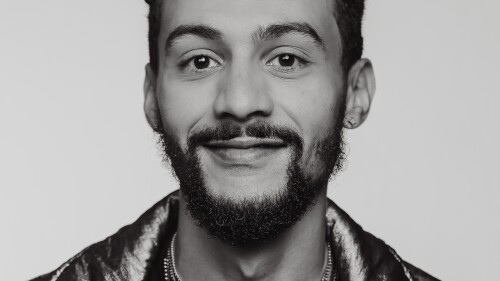

Whoever ends up with the job could have the power to fire GM Troy Weaver.

Reggie Miller clarifies a comment he made commending Anthony Edwards for taking responsibility over Minnesota’s Game 3 loss and saying veterans usually deflect blame, which people took as a jab to LeBron James.

Mike Krzyzewski is an “unofficial resource” with the Lakers on the coaching search.
MLB

Despite his recent slump, Arizona Diamondbacks center fielder Corbin Carroll is showing signs that he’s poised for a fantasy rebound.

Toronto Blue Jays starting pitcher Alek Manoah has a way to go before being trusted in fantasy baseball, but he’s a player worth monitoring for the future.

Paul Skenes’ highly-anticipated debut was defined by his velocity and strength with the splitter, and while wins may be difficult to come by, he could likely become a top-40 SP over the next few months.

Robert Gasser’s skillset and above-average command should provide a boost to fantasy managers in need of a short-term starter, with the Pirates and Marlins on deck to build on his potential.
Betting

Drew Dinsick and Jay Croucher review post position draw odds for key horses ahead of the Preakness Stakes, highlighting outlooks for Mystik Dan, Imagination and Tuscan Gold.
Bet the Edge analyzes odds for Scottie Scheffler and Rory McIlroy at the PGA Championship, where both golfers have “fair” prices ahead of the tournament.

Brad Thomas joins Bet the Edge to evaluate Brooks Koepka’s outlook at the PGA Championship and Jon Rahm’s ability to bounce back after a subpar Masters performance.
Vaughn Dalzell breaks down how to bet on Jalen Brunson while dealing with a foot injury in Game 5 between the New York Knicks and Indiana Pacers.
College Basketball

Green Bay announced Tuesday that Gottlieb will take over for Sundance Wicks, who left the Phoenix after one year to take over Wyoming’s program.

The game, which will be played on Saturday, Dec. 21, will feature two of the college game’s biggest stars in USC’s JuJu Watkins and UConn’s Paige Bueckers.

Bluder made the announcement Monday, five weeks after Iowa lost to South Carolina in the national title game and superstar Caitlin Clark ended her college career.

Christian Reeves is a 7-foot-1 junior from Charlotte who has three years of eligibility starting next season.
College Football

The College Football Transfer Portal is underway. Here is a one-stop shop to track which big-name players are on the move this offseason.

Former Michigan star quarterback Denard Robinson is no longer part of Sherrone Moore’s coaching staff, school spokesman Dave Ablauf confirmed.

The defending champion Wolverines will kick off their 2024 season against the Bulldogs on NBC and Peacock.

With the spring transfer portal window closed, a look at six college football teams that cleaned up in various ways.
Brother From Another

Michael Holley and Vincent Goodwill discuss the rotation of NBA head coaches, including whether JJ Redick could become the coach of the Los Angeles Lakers, and the impact of the Phoenix Suns hiring Mike Budenholzer.

Michael Holley and Vincent Goodwill discuss the Detroit Lions signing Jared Goff to a 4-year, $212 million extension, and why the signal caller has earned the recognition that comes with the new contract.

Vincent Goodwill joins Michael Holley to unpack the New York Knicks-Indiana Pacers series, and to debate whether Jalen Brunson is talented enough to be the top player on a championship-caliber team.

Michael Holley and Vincent Goodwill give their takeaways from the Oklahoma City’s Game 4 win over the Dallas Mavericks, including how the young Thunder team played with heart and showed resiliency.


Local coverage

The 49ers won’t have to wait long for one of their marquee games, as they’ll kick off the campaign with a contest against Aaron Rodgers and the New York Jets.

The answers to schedule questions pertaining to the Bears will come on Wednesday.

The steady veteran has given the Celtics exactly what they need this postseason.

What will it look like? What kind of returners will work best? How will they defend it? How will it work?
Latest

Tottenham handed Manchester City the advantage in the Premier League title race, much to the delight of most of their fans.

Commanders offensive coordinator Kliff Kingsbury says quarterback Jayden Daniels is already impressing as the right fit in Washington’s offense, after just a few weeks of studying and one rookie minicamp.

Fox is making a big deal about the official arrival of Tom Brady as the analyst on the network’s No. 1 broadcast team, complete with Brady getting top billing over the game he’ll be calling to launch the next phase of his career.

Heavy rain is affecting the Chapel Hill Regional while No. 1 seed Arizona State is chasing in Rancho Santa Fe.

Martavis Bryant has a workout scheduled with the Commanders for Wednesday, Aaron Wilson of KPRC reports.