


Golfers tee off for the opening round of the RBC Heritage at Harbour Town Golf Links, part of the PGA Tour. Watch live on Golf Channel, Peacock, or the NBC Sports app.

6:00PM EDT
The Chevron Championship - Late Rd 1
LPGA Tour
Golf Channel


6:00PM EDT
Chevron Championship: Rd. 1
LPGA Tour
Peacock


Top Headlines


Tony Dungy thinks back to the 1977 NFL Draft, where he revisits his feelings after going undrafted and what it was like to get a call from the legendary Chuck Noll just a day later.

Joe Prince-Wright and Nick Mendola preview Arsenal’s suddenly make-or-break showdown against Wolves in Matchweek 34, where the Gunners’ season is now on the line following their Champions League exit to Bayern Munich.
WATCH NOW
Belichick 'opened the vault' on draft process
Mike Florio and Chris Simms digest Bill Belichick's insight on how media reports on players' draft stock come from their agents, not teams, and how information within 12 hours of the draft can be very accurate.
Up Next


NBC Sports Podcasts
-
 Robbie Mustoe and Robbie Earle discuss and dissect the top Premier League storylines after every single matchweek.
 -
 15x AMA Champion Ricky Carmichael and 9x AMA Champion Ryan Villopoto recap the week in Supercross and Motocross racing.
 -
 The expert analysts of NASCAR on NBC take a deep, insightful dive into every Cup race.
 -
 Former college basketball players Meghan McKeown, Zora Stephenson, and Robbie Hummel take charge with Big Ten hoops insights.
 -
 The former QB gives his unfiltered analysis on all things NFL. Clap it up!
 -
 From spreads and totals to futures and player props, Jay Croucher and Drew Dinsick have you covered.
 -
 Join Matthew Berry and the crew for the latest information on the NFL and fantasy football.
 -
 RotoPat, Denny Carter, Kyle Dvorchak and others from the Rotoworld crew give their analysis and opinions on all things NFL.
 -
 The Rotoworld crew has you covered with top-notch fantasy baseball analysis, waiver wire pickups, latest injury news and more.
Road to Paris

The 2024 U.S. Olympic team roster of athletes updated as they qualify.

Sha’Carri Richardson makes her 2024 season debut at the first Diamond League meet in Xiamen, live on Peacock.

Emma McKeon, who won seven medals in Tokyo, plans to end her Olympic career in Paris.

World Relays take place in the Bahamas from May 4-5.

The U.S. Olympic men’s basketball team goes for a fifth consecutive title in Paris.

The 2024 Paris Olympics Opening Ceremony is July 26 with medal competition running through Aug. 11.

Simone Biles detailed her long road back from the twisties to return to the top of gymnastics.


NFL

Five players who were suspended a year ago over violations of the NFL gambling policy have been reinstated.

Giants wide receiver Darius Slayton is not with the team during their first week of offseason workouts because he would like a new deal and his status was a topic of conversation at General Manager Joe Schoen’s press conference on Thursday.

In the first season under head coach Shane Steichen last year, the Colts finished 9-8 but missed out on a berth in the playoffs with their Week 18 loss at home against the Texans.

After going 6-11 and missing the playoffs for a second straight year last season, the Titans fired head coach Mike Vrabel as a new era in Tennessee gets underway.
Rotoworld

Kyle Dvorchak breaks down the potential first-round wide receivers ahead of the 2024 NFL Draft.


The FFHH crew discuss the teams they feel should draft a running back in the 2024 NFL Draft, including the Dallas Cowboys, the Baltimore Ravens and the Cincinnati Bengals.

Matthew Berry, Connor Rogers and Jay Croucher discuss the game of Georgia tight end Brock Bowers and evaluate his top landing spots in the 2024 NFL Draft.

Eric Samulski breaks down a few slow starters to see if it’s time for us to panic.

Premier League: The Run In

A look at the remaining schedule for Arsenal, Liverpool and Manchester City as the title race goes down to the wire.

Will Manchester City complete its quest for an unprecedented fourth-straight title?

This season’s Premier League title race is a beauty and Jurgen Klopp knows the Reds’ standards versus Crystal Palace were not good enough for silverware.

When Arsenal ran out of stream in the second half against Aston Villa on Sunday you knew what was coming. There was tension in the air amongst the home fans. They were quiet. Agitated. Frustrated.

Check out the Premier League fixtures and results for the 2023-24 season

The Premier League title race is a remarkable three horse race as we enter the final six games of the 2023-24 season.

“It’s now, the moment is now,” Arteta said after Arsenal lost to Aston Villa. “After this blow, how we react”
Golf

Scottie Scheffler didn’t put in his usual prep work ahead of the RBC Heritage, prioritizing his rest and recovery after a hard-fought victory at the Masters.

Look back at the best shots and moments from early window action in Round 1 at the 2024 Chevron Championship, taking place at The Club at Carlton Woods in The Woodlands, Texas.

Lilia Vu won’t defend her title at the Chevron Championship.

The Ocean Course has hosted two previous PGA’s, won by Phil Mickelson and Rory McIlroy.

So Yeon Ryu speaks with Amy Rogers about her emotions ahead of retirement, what she’ll remember most about her time on the LPGA Tour and why she values the friendships she’s made along the way.

Watch highlights from the first round of the 2024 Corales Puntacana Championship from Puntacana Resort in the Dominican Republic.
NBA

Dan Patrick talks with Adam Lefkoe about the wide-ranging implications for the Pelicans after Zion Williamson’s hamstring injury, what’s next for Golden State after its play-in loss and more.

Veteran sports betting reporter David Purdum joins Dan Patrick to dissect the fallout from the NBA’s decision to ban Jontay Porter for life after violating gambling rules.

Dan Patrick and co. react to Jontay Porter’s ban from the NBA for betting and discuss whether the league’s gambling policy is working as intended.

Was Wembanyama worthy of making the DPOY ballot, too?
MLB

Jorge Montanez breaks down the week of saves across baseball in his weekly closer rankings and highlights some steals options on the waiver wire.


The Rotoworld Baseball Show debates Jack Leiter’s fantasy outlook after his call-up to the Texas Rangers, highlighting why his stay in the majors could be for the “short term.”

Eric Samulski and Scott Pianowski review where fantasy managers should turn in the wake of Ozzie Albies’ toe injury, assessing how it impacts Orlando Arcia and Jarred Kelenic and others.

Eric Samulski analyzes a few players fantasy managers should add, hold or drop almost three weeks into the MLB season, such as Miami Marlins starter Edward Cabrera and St. Louis Cardinals outfielder Jordan Walker
Premier League

Joe Prince-Wright and Nick Mendola preview Liverpool’s Matchweek 34 fixture against Fulham, where the Reds will look to rebound from their loss to Crystal Palace last weekend and keep their title hopes alive.

Joe Prince-Wright and Nick Mendola preview this weekend’s FA Cup semi finals between Manchester City v. Chelsea, and Coventry City v. Manchester United and discuss how important this trophy is for Erik ten Hag.

Joe Prince-Wright and Nick Mendola analyze Arsenal’s loss to Bayern Munich in the Champions League and discuss the potential fallout from the loss.

Which of the four possible UEFA Champions League Final match-ups in London would be the most interesting?
Motor Sports

Phil Nicoletti will complete the 250 West schedule in Supercross and then move up to the 450 class beginning with the outdoor season.

Even casual fans can probably guess the No. 1 superspeedway driver, but a few other names might be surprises.

The 20-year-old from France is the youngest winner in F2 and F3.

NASCAR teams compete at a drafting style track for the third time this season.
Betting

Drew Dinsick and Vaughn Dalzell analyze the market for the Sacramento Kings vs. the New Orleans Pelicans, explaining why they’re more confident in Sacramento in the win-and-in scenario.

Vaughn Dalzell and Drew Dinsick examine the market for the Cleveland Cavaliers vs. Orlando Magic NBA playoff series, in which they’re clearly aligned on the victor.

Brad Thomas is on a heater cashing back-to-back outright tickets. He’s back hoping to hit his third in a row for the RBC Heritage.


Vaughn Dalzell and Drew Dinsick discuss the best tactics on how to handicap the Lakers vs. Nuggets series, where Drew thinks the Lakers can pull out a few wins as he marks their home games as 30/30 toss ups.
College Basketball

NCAA fast tracks rule change to make multi-time transfers immediately eligible, matching court order
NCAA athletes will be immediately eligible to play no matter how many times they transfer — as long as they meet academic requirements — after the association fast-tracked legislation Wednesday to fall in line with a recent court order.

The 6-foot-10 sophomore averaged 9.0 points and 7.2 rebounds this past season.

The former Iowa star will now try and help revive the Indiana franchise along with last season’s No. 1 pick, Aliyah Boston.

Pope’s introduction came two days after Kentucky hired him to replace John Calipari, a Hall of Fame coach who was hired by Arkansas on Wednesday.
College Football

The College Football Transfer Portal is underway. Here is a one-stop shop to track which big-name players are on the move this offseason.

Connor Rogers’ latest NFL mock draft takes a look at what he would do if he were in the GM chair for each team’s first selection.


Defensive back Trystan Haynes (Oklahoma City, OK/ Carl Albert High School), the four-star prospect has officially accepted his invitation to the 2025 All-American Bowl.

Eric Froton breaks down the top EDGE players in the 2024 NFL Draft, headlined by UCLA’s Laiatu Latu and Alabama’s Dallas Turner.
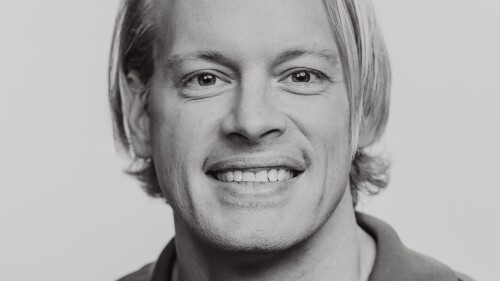
Brother From Another

Michael Holley and Vinnie Goodwill react to the NCAA’s decision to put the Michigan Wolverines football program on probation, where the school also received fines for violating recruiting rules.

Terrika Foster-Brasby goes behind the scenes of the WNBA Draft to explain the limited number of roster spots, and the difference between playing in the W vs. playing in college.

Terrika Foster-Brasby looks back on South Carolina’s difficult path to the NCAA Championship and explains why the team deserves more credit for going undefeated in a rebuilding year.

Michael Holley and Terrika Foster-Brasby explain why they think the NBA’s play-in tournament is a great idea because it gives fringe teams the chance to be competitive in the playoffs.


Local coverage

The goal of the team that will travel to Paris for the Summer Olympic Games is to remind opponents that a gap still exists.

“The Patriots failed to provide that for Mac (Jones). Hence, this is where they are right now.”

The star wide receivers share an important family bond that is appreciated not just on the football field.

The Bears created a new position to bring in Ted Crews.
Latest

The UEFA Europa League and Conference League quarterfinals are here and three Premier League clubs — Aston Villa, Liverpool and West Ham — are still hopeful of silverware.

Last season, the Jaguars were 8-3 and looked primed to win a second straight AFC South division title before losing five of their final six games to finish at 9-8 and miss the playoffs altogether.

The Jim Harbaugh era is underway in Los Angeles.

The Houston Texans are one of the teams with the brightest futures in the league.

The Commanders won’t be on the clock until next Thursday night, but General Manager Adam Peters expects the team to finalize their plans before things get underway in Detroit.