


Simons Biles, Suni Lee and more compete at the Core Hydration Classic. Watch live here on CNBC and Peacock!


Top Headlines


In a stacked women’s 200m field, Sydney McLaughlin-Levrone tries her hand in a different event and shows off her speed by winning with a lifetime-best time of 22.07 at the LA Grand Prix.

Eleven gymnasts with Olympic or world championships medals are entered in the Core Hydration Classic.
WATCH NOW
Mystik Dan, Imagination headline Preakness field
Ahmed Fareed, Randy Moss and Jerry Bailey discuss the field for the 149th Preakness Stakes, analyzing the chances for Mystik Dan, Imagination and more to win at Pimlico.
Up Next


NBC Sports Podcasts
-
 Robbie Mustoe and Robbie Earle discuss and dissect the top Premier League storylines after every single matchweek.
 -
 15x AMA Champion Ricky Carmichael and 9x AMA Champion Ryan Villopoto recap the week in Supercross and Motocross racing.
 -
 The former QB gives his unfiltered analysis on all things NFL. Clap it up!
 -
 The Rotoworld crew has you covered with top-notch fantasy baseball analysis, waiver wire pickups, latest injury news and more.
 -
 From spreads and totals to futures and player props, Jay Croucher and Drew Dinsick have you covered.
 -
 The expert analysts of NASCAR on NBC take a deep, insightful dive into every Cup race.
 -
 Former college basketball players Meghan McKeown, Zora Stephenson, and Robbie Hummel take charge with Big Ten hoops insights.
 -
 Join Matthew Berry and the crew for the latest information on the NFL and fantasy football.
 -
 RotoPat, Denny Carter, Kyle Dvorchak and others from the Rotoworld crew give their analysis and opinions on all things NFL.
149th Preakness Stakes

D. Wayne Lukas’s Seize the Grey goes wire-to-wire to win the 149th Preakness Stakes, giving the 88-year-old trainer his seventh career Preakness win and ending Mystik Dan’s Triple Crown bid.

Seize the Grey jockey Jaime Torres explains why he’s “thankful” after winning the 2024 Preakness Stakes in his Triple Crown debut

Seize the Grey trainer D. Wayne Lukas discusses the emotions of winning the 2024 Preakness Stakes, explaining why the feeling of victory “never gets old” after seven career Preakness wins.

Mystik Dan trainer Ken McPeek gives his instant reaction to D. Wayne Lukas and Seize the Grey winning the 2024 Preakness Stakes, shutting down Mystik Dan’s bid for a Triple Crown.

Steve Kornacki analyzes D. Wayne Lukas being back on the winning path, explaining why the 88-year-old is proving “it’s never too late for a comeback.”
Steve Kornacki hits the big board to discuss the trend of horses skipping the Kentucky Derby and racing in the Preakness Stakes.

Balnikhov, along with jockey Frankie Dettori, gets the job done in the 2024 Dinner Party Stakes.
NFL

Sports mega-company takes Cardinals rookie to court.

Harrison declined invitation to join other new players

If familiarity breeds contempt, there will be plenty of contempt on Thursday nights this year.

Broncos rookie quarterback Bo Nix knows head coach Sean Payton’s track record of developing winning offenses, and he knows he was drafted to continue that legacy.
Premier League: The Run In

A look at the remaining schedule for Arsenal, Liverpool and Manchester City as the title race goes down to the wire.

Will Manchester City complete its quest for an unprecedented fourth-straight title?

Mikel Arteta’s Arsenal have taken the Premier League title race to the final weekend. Here’s everything you need to know

The Premier League title race between Manchester City and Arsenal is going down to the final game of the season and the odds are intriguing as to what will happen and who will win it all.

The Premier League tiebreaker rules will be needed on the final day of the 2023-24 season as Championship Sunday promises to be a wild day of permutations.

The 2023-24 Premier League season’s three-horse title race is down to two, and Week 38 will tell us whether Manchester City or Arsenal are the champions of England’s top-flight.

“If you don’t like playing in these games you shouldn’t play football.”


Rotoworld

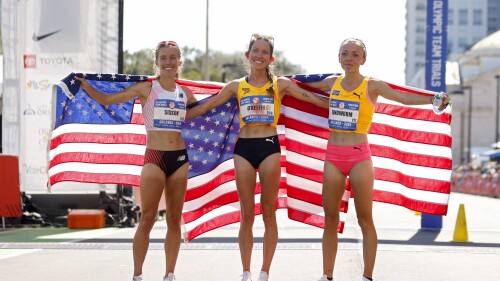
Matthew Pouliot leads off his weekly pickups column with an inconsistent Angels starter.

The Spurs have their franchise player in Victor Wembanyama, but who else is making an impact in fantasy hoops?

Saquon Barkley’s high price tag going into 2024 fantasy drafts creates several scenarios for managers at the back half of first rounds and early in the second.

Davis Mattek and the Rotoworld Football Show debate 2024 fantasy ADPs for C.J. Stroud after his historic rookie year and Jordan Love fresh off the Packers’ surprising season.
Premier League

Eight of the Premier League’s 20 teams remain eligible for European qualification next season, and the FA Cup Final will likely have a big say in who gets there after Manchester United’s recent stumbles.

Will Erling Haaland hold on to claim another Premier League Golden Boot? He’s got a six-goal advantage on Cole Palmer late in the season.

Leicester City and Ipswich Town have clinched promotion and an epic Championship playoff final has been set up.

Two of the most fun things in Premier League fandom are predicting who will thrive in an upcoming season and reviewing who actually did the thing at the end of the campaign.
Golf

Morikawa and Schauffele are at 15 under but there are 13 players within five shots.

Scheffler struggled on the front nine Saturday and wasn’t able to stay in contention for his second major of the year.

Tee times and pairings for the final round of the 106th PGA Championship.

Collin Morikawa catches up with Todd Lewis about his performance in Round 3 of the 2024 PGA Championship that makes him a co-leader going into the final day of the tournament.

Xander Schauffele talks with Todd Lewis about his redemption on the back-nine during Round 3 of the 2024 PGA Championship to remain a co-leader going into the final day of the tournament.

Korda had her five-win streak stopped last week, but she’s closing in on another victory in NJ.
Motor Sports

It took just one season to get comfortable with stadium racing before Tom Vialle captured his first 250 title.

Christopher Bell’s crew wins pit crew competition.

Day 1 of qualifying for the 108th Indy 500 is complete at Indianapolis Motor Speedway.

NASCAR Cup teams will set the order for the All-Star Race Saturday at North Wilkesboro.
NBA

Hart had to leave Game 6 with an abdominal strain, Anunoby has been out with a strained hamstring.

For the Knicks, the questions start with if Josh Hart will play.

We’ve got dates, times and where to watch for all the second round NBA playoff games

Siakam helps Pacers beat Knicks 116-103 in Game 6 to send Eastern Conference Semifinals to the limit
The decisive Game 7 will be played Sunday at Madison Square Garden.
MLB

Juan Soto says he’s open to in-season contract talks with the Yankees as All-Star slugger settles in
Soto said Thursday he would give his blessing to contract talks during the season if the Yankees want to approach his agent Scott Boras about a long-term contract.

James Schiano breaks down Statcast’s new Blast Rate statistic and which players stand out from around MLB.

Jorge Montanez breaks down the week of saves across baseball in his weekly closer rankings and highlights some steals options on the waiver wire.


Blanco was ejected at the start of the fourth inning of the 2-1 win over Oakland on Tuesday after umpires found a foreign substance ton his glove.
Betting

Vaughn Dalzell shares his best bets for the weekend of NBA playoff betting.

Jay Croucher and Drew Dinsick explain why the decisions being made in the Thunder-Mavericks series confuse them and ponder what comes next in Game 6.

Jay Croucher and Drew Dinsick share their overall impressions from the NFL schedule release and how they’re pricing specific matchups, including Ravens at Chiefs.

The Lions and Rams are set for a rematch on Sunday Night Football in Week 1 of the 2024 NFL season after their thrilling playoff game, but who will hold the edge this time around?
College Basketball

Jan Jensen had numerous head coaching opportunities in her 24 years as an assistant on Lisa Bluder’s coaching staff at Iowa.

Green Bay announced Tuesday that Gottlieb will take over for Sundance Wicks, who left the Phoenix after one year to take over Wyoming’s program.

The game, which will be played on Saturday, Dec. 21, will feature two of the college game’s biggest stars in USC’s JuJu Watkins and UConn’s Paige Bueckers.

Bluder made the announcement Monday, five weeks after Iowa lost to South Carolina in the national title game and superstar Caitlin Clark ended her college career.
College Football

The College Football Transfer Portal is underway. Here is a one-stop shop to track which big-name players are on the move this offseason.

Wide receiver Jerome Myles (Draper, UT/ Corner Canyon High School), the four-star prospect has officially accepted his invitation to the 2025 All-American Bowl.

Defensive back Trey McNutt (Cleveland, OH/ Shake Heights High School), the five-star prospect has officially accepted his invitation to the 2025 All-American Bowl.

Former Michigan star quarterback Denard Robinson is no longer part of Sherrone Moore’s coaching staff, school spokesman Dave Ablauf confirmed.
Brother From Another

Brother From Another dives into Las Vegas Aces ‘megastar’ A’ja Wilson’s dominant performance in the Aces’ WNBA regular-season opener and how she landed a signature shoe deal with Nike.

Brother From Another discusses Caitlin Clark’s WNBA debut where she struggled with her shot and committed 10 turnovers in the Indiana Fever’s loss to the Connecticut Sun.

Brother From Another discusses Luka Doncic’s performance in the NBA Playoffs and how the Dallas Mavericks superstar has carried the team to the cusp of a Western Conference Finals appearance.

Brother From Another looks at Bronny James’ NBA Draft journey and how the situation with his father LeBron James shows the importance of nepotism in the Black community.


Local coverage

The Super Bowl LVIII rematch between the 49ers and Kansas City Chiefs is set for Week 7, but the real question is: Will Taylor Swift be in attendance?

The Patriots signed Brissett to a one-year deal worth $8 million, and he now understands that part of his gig will be to help guide Drake Maye.

The Bears’ 2024 schedule arrived Wednesday and had a few notable quirks, including that the Bears do not play a divisional game until Week 11.

As the Eagles prepare for OTAs next week, here’s a breakdown of their most crowded position group.
Latest

Lowry just missed a birdie putt on the final hole to set a new men’s major record.

Thomas’ chip in at the 256-yard, par-3 14th might have been the shot of the championship, so far.

Here’s a look at every player who has at least shot 63 in a men’s major.

Scheffler dropped four shots in his first four holes in Round 3 of the PGA Championship.

As the Battlehawks hope to force the road to St.