


The PGA Tour’s best go head-to-head in the second round of the RBC Heritage at Harbour Town Golf Links. Watch on Golf Channel.

5:50PM EDT
Long Beach: Practice 1
Peacock


6:00PM EDT
The Chevron Championship - Late Rd 2
LPGA Tour
Golf Channel


6:00PM EDT
Chevron Championship: Rd. 2
LPGA Tour
Peacock
Top Headlines


The Oklahoma City Thunder are well represented.

The 93rd edition of the Blue-Gold game is set for Saturday on Peacock.
WATCH NOW
PFT Draft: Teams that must nail the 2024 NFL Draft
From the Cowboys to the Vikings, Mike Florio and Myles Simmons outline which teams have too much to lose if they don't play their cards right in the draft.
Up Next


NBC Sports Podcasts
-
 Robbie Mustoe and Robbie Earle discuss and dissect the top Premier League storylines after every single matchweek.
 -
 15x AMA Champion Ricky Carmichael and 9x AMA Champion Ryan Villopoto recap the week in Supercross and Motocross racing.
 -
 The expert analysts of NASCAR on NBC take a deep, insightful dive into every Cup race.
 -
 Former college basketball players Meghan McKeown, Zora Stephenson, and Robbie Hummel take charge with Big Ten hoops insights.
 -
 The former QB gives his unfiltered analysis on all things NFL. Clap it up!
 -
 From spreads and totals to futures and player props, Jay Croucher and Drew Dinsick have you covered.
 -
 Join Matthew Berry and the crew for the latest information on the NFL and fantasy football.
 -
 RotoPat, Denny Carter, Kyle Dvorchak and others from the Rotoworld crew give their analysis and opinions on all things NFL.
 -
 The Rotoworld crew has you covered with top-notch fantasy baseball analysis, waiver wire pickups, latest injury news and more.
Premier League: The Run In

A look at the remaining schedule for Arsenal, Liverpool and Manchester City as the title race goes down to the wire.

The Premier League title race is a remarkable three horse race as we enter the final six games of the 2023-24 season.

Will Manchester City complete its quest for an unprecedented fourth-straight title?

Check out the Premier League fixtures and results for the 2023-24 season

Matchweek 34 of the Premier League sees the potential for a dramatic reshaping off the relegation zone, plus Arsenal and Liverpool have opportunities to take advantage of FA Cup-competing Manchester City.

This season’s Premier League title race is a beauty and Jurgen Klopp knows the Reds’ standards versus Crystal Palace were not good enough for silverware.

When Arsenal ran out of stream in the second half against Aston Villa on Sunday you knew what was coming. There was tension in the air amongst the home fans. They were quiet. Agitated. Frustrated.


NFL

The Bills confirmed the Pegulas have hired investment bankers about a potential sale of a non-controlling, minority interest.

After going 5-12 in 2022, the Rams were one of the surprise teams in 2023, going 10-7 to reach the playoffs, where they lost by one point at Detroit in the Wild Card.

The Cardinals have gone 4-13 in each of the last two seasons, but this year’s draft could mark the beginning of the team’s turnaround.

After missing the playoffs last season, the Seahawks chose to move on from Pete Carroll, who had been Seattle’s head coach since 2010.
Rotoworld
The Oklahoma City Thunder are well represented.

Matthew Pouliot evaluates some hitters worth adding in mixed leagues.
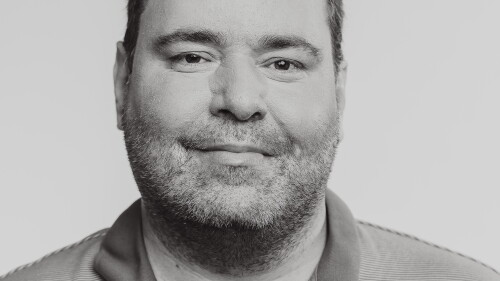

Hayden Winks of Underdog Fantasy joins Patrick Daugherty, Denny Carter and Kyle Dvorchak to assess how the NFL draft will change Brock Bowers’ fantasy football outlook and where Bo Nix stacks up in this year’s draft.

Hayden Winks joins the Rotoworld Football Show to discuss where Washington WR Ja’Lynn Polk and Texas WR Adonai Mitchell rank among the top wide receiver prospects ahead of this year’s NFL draft.
Road to Paris

The 2024 U.S. Olympic team roster of athletes updated as they qualify.

Rowing gold medalist Stefanos Ntouskos of Greece was the first torchbearer of the 2024 Olympic torch relay.

Kenyan Hellen Obiri repeated as Boston Marathon women’s champion, while Ethiopian Sisay Lemma won the men’s race.

2024 Boston Marathon top 10 and notable results.

Mykolas Alekna broke a 37-year-old world record in the men’s discus.

20-year-old American Evy Leibfarth is headed to her second Olympics after earning a spot in the canoe slalom event at U.S. Trials in Montgomery, Alabama.

Evy Leibfarth is the first American to qualify for the Paris Olympics in caoneing.
Golf

Korda shot 69 on Friday at the Chevron Championship to take the clubhouse lead.

Co-leader Collin Morikawa explains how he shot a 5-under 66 in Round 2 of the RBC Heritage despite hitting just eight greens in regulation, as well as the improvements he’s made with the putter this year.

Watch highlights from Nelly Korda’s second-round 69 at the Chevron Championship at The Club at Carlton Woods.

Look back at the best shots and moments from early window action in Round 2 at the 2024 Chevron Championship, taking place at The Club at Carlton Woods in The Woodlands, Texas.

In normal times, baseless rumors are ignored. But these aren’t normal times.

With Nelly Korda chasing the American record of winning five straight LPGA starts, Nancy Lopez -- the current record-holder -- shares what it feels like to be on such a run, as well as some of the challenges.
NBA

Jamal Crawford joins Dan Patrick to discuss Kevin Durant, Jayson Tatum and Jalen Brunson entering the 2023-24 NBA playoffs as well as the most entertaining players in history.

Vaughn Dalzell breaks down his two picks for the NBA Play-in game between the Bulls and Heat, plus the Kings versus Pelicans.
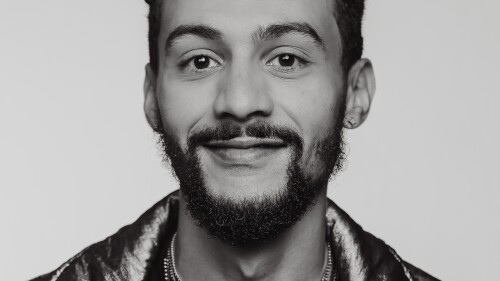

Sheppard is projected as a top-10 pick come June.

This is an NBA playoffs poised for some first-round upsets.
MLB

Vaughn Dalzell explains why the Pirates’ Paul Skenes has a shot at winning NL Rookie of the Year despite not being on the big league roster right now.

Chapman (0-1) was ejected by plate umpire Edwin Moscoso after Harrison Bader doubled in the eighth inning of the Pirates’ 6-3 loss to the Mets.

Legendary fireballer Randy Johnson joins Dan Patrick to revisit the time he hit a bird while pitching, how pitching has changed from his prime to the modern game and more.

Eric Samulski breaks down a few slow starters to see if it’s time for us to panic in fantasy baseball.

Premier League

Manchester City have taken the lead in the Premier League race. Check out Brad Thomas’ Premier League Betting Power Rankings for Matchday 34.


Will Erling Haaland hold on to claim another Premier League Golden Boot? Cole Palmer is level with the Norwegian on 20 goals late in the season.

Whose injury status is up in the air, and who’s hoping to be fit in time for matchweek 34?

Liverpool’s sole focus is the Premier League title race, and they’ll look to overcome weary legs and Fulham at Craven Cottage on Sunday.
Motor Sports

Jesse Love and Austin Hill form Richard Childress Racing’s Xfinity lineup.

Jeb Burton looks to repeat his victory from last year’s race.

The Talladega Superspeedway weekend begins with qualifying.

While Ryan Blaney seeks his first win of the year, he remains ahead of where he was at this point last year.
Betting
Vaughn Dalzell explains why the Pirates’ Paul Skenes has a shot at winning NL Rookie of the Year despite not being on the big league roster right now.
Vaughn Dalzell breaks down his two picks for the NBA Play-in game between the Bulls and Heat, plus the Kings versus Pelicans.

Penix, Fuaga, and Arnold Over/Under Props

Connor Rogers joins Jay Croucher and Drew Dinsick to discuss the buzz around the Giants and Jets as they each enter the 2024 NFL Draft with a top-10 pick.
College Basketball

AJ Storr will give Kansas an infusion of athleticism and scoring on the wing.

NCAA fast tracks rule change to make multi-time transfers immediately eligible, matching court order
NCAA athletes will be immediately eligible to play no matter how many times they transfer — as long as they meet academic requirements — after the association fast-tracked legislation Wednesday to fall in line with a recent court order.

The 6-foot-10 sophomore averaged 9.0 points and 7.2 rebounds this past season.

The former Iowa star will now try and help revive the Indiana franchise along with last season’s No. 1 pick, Aliyah Boston.
College Football

The College Football Transfer Portal is underway. Here is a one-stop shop to track which big-name players are on the move this offseason.

The 93rd edition of the Blue-Gold game takes place this Saturday, April 20 at 1:00 PM ET exclusively on Peacock.

Connor Rogers’ latest NFL mock draft takes a look at what he would do if he were in the GM chair for each team’s first selection.


Defensive back Trystan Haynes (Oklahoma City, OK/ Carl Albert High School), the four-star prospect has officially accepted his invitation to the 2025 All-American Bowl.
Brother From Another

Now 16 seasons since his last NBA title, Brother From Another explores what narratives could form if Doc Rivers and the Milwaukee Bucks fall to the Indiana Pacers in the first round.

Michael Holley and Vinnie Goodwill react to the NCAA’s decision to put the Michigan Wolverines football program on probation, where the school also received fines for violating recruiting rules.

Michael Holley says this season’s iteration of the 76ers deserves more “respect” compared to their recent rosters ahead of Wednesday’s play-in clash with the Miami Heat.

Brother From Another explains why the Golden State Warriors dominant run is “officially over” after elimination in the play-in tournament, where Steph Curry & Co. looked “two steps behind” the Kings.


Local coverage

The C’s star opened up about his playoff mindset in an exclusive sitdown with our Chris Forsberg.

With his future hazy and subjected to educated guesses and rampant speculation, Klay Thompson spent almost 17 minutes steering discussion into his comfort zone.

The Phillies took advantage of the opportunity in front of them, beating the Rockies with starting pitching, defense and two of their better offensive nights of the season.

The Bears are poised to draft Caleb Williams with the No. 1 overall pick. After that things get hazier.
Latest

After losing in overtime against the Chiefs in Super Bowl LVIII in February, the 49ers remain in win-now mode.

It’s a new day in Washington.

After winning a Wild Card playoff game in the 2022 NFL season, the New York Giants took a major step back in 2023.

The Dallas Cowboys enter the 2024 NFL Draft knowing they have a lot to prove this upcoming season.

The 2023 NFL season did not end how the Eagles wanted it to as Philadelphia lost six of its final seven games, including a 32-9 drubbing in the Wild Card round at the hands of the Tampa Bay Buccaneers.