


Devin McCourty and Chris Simms analyze which NFL teams helped themselves the most in the offseason, including the Houston Texans, Baltimore Ravens and Tennessee Titans.


Wed, May 08
1:00PM EDT
The Bump
Peacock


Wed, May 08
3:00PM EDT
PGA WORKS Collegiate: Rd. 3
Peacock
Top Headlines


Kelly Cates, Ian Wright, Tim Sherwood, and Darren Lewis have a roundtable discussion regarding the Premier League Run In, and assess Manchester City’s chances.

The Dan Patrick Show debates the officiating down the stretch in Game 1 of Pacers-Knicks and breaks down Jalen Brunson’s “wonderful” performance once again to show that he’s a star.
WATCH NOW
Best international calls of Cup finish at Kansas
Relive Kyle Larson's history-making win during the AdventHealth 400 at Kansas Speedway as heard on the international broadcasts in Mexico, France, Brazil, Poland, Hungary, and Greece.
Up Next


NBC Sports Podcasts
-
 Robbie Mustoe and Robbie Earle discuss and dissect the top Premier League storylines after every single matchweek.
 -
 15x AMA Champion Ricky Carmichael and 9x AMA Champion Ryan Villopoto recap the week in Supercross and Motocross racing.
 -
 The former QB gives his unfiltered analysis on all things NFL. Clap it up!
 -
 The Rotoworld crew has you covered with top-notch fantasy baseball analysis, waiver wire pickups, latest injury news and more.
 -
 From spreads and totals to futures and player props, Jay Croucher and Drew Dinsick have you covered.
 -
 The expert analysts of NASCAR on NBC take a deep, insightful dive into every Cup race.
 -
 Former college basketball players Meghan McKeown, Zora Stephenson, and Robbie Hummel take charge with Big Ten hoops insights.
 -
 Join Matthew Berry and the crew for the latest information on the NFL and fantasy football.
 -
 RotoPat, Denny Carter, Kyle Dvorchak and others from the Rotoworld crew give their analysis and opinions on all things NFL.
Premier League: The Run In

A look at the remaining schedule for Arsenal, Liverpool and Manchester City as the title race goes down to the wire.

The Premier League title race is going to be an extremely tight race until the very end, as we enter the final stretch of the 2023-24 season.

Will Manchester City complete its quest for an unprecedented fourth-straight title?

Check out the Premier League fixtures and results for the 2023-24 season

Jurgen Klopp targets best finish possible and gets a little introspective as his final Liverpool games coincide with minuscule Premier League title hopes

Matchweek 36 of the Premier League sees upset bids, title ramifications, and great escape hopefuls.

“It’s an opportunity to show what you are capable of. I am really, really enjoying this challenge.”
NFL

The schedule release had been expected this week, and the NFL has offered no reason for the delay.

The UFL quietly is doing better than its predecessors.

Eagles director of scouting Brandon Hunt is interviewing today for the Patriots’ lead personnel job, Adam Schefter of ESPN reports.

Joe Collier, who coached the Bills for three years before serving for 17 seasons as defensive coordinator of the Broncos, has died.


Rotoworld

Patrick Daugherty and Denny Carter discuss the fantasy implications for rookie running backs MarShawn Lloyd with the Green Bay Packers and Jonathon Brooks with the Carolina Panthers.

The RFS crew dive into Houston Texans WR Tank Dell’s role in the 2024 fantasy football season, comparing him to teammates Stefon Diggs and Nico Collins.

Patrick Daugherty and Denny Carter analyze the Tennessee Titans wide receiver group and whether quarterback Will Levis could be the long-term solution for the franchise.

George Bissell breaks down the arrival of top prospects Kyle Manzardo and Christian Scott in addition to a strong stretch from veteran Jameson Taillon.

Premier League

Leon Osman and Owen Hargreaves take a closer look into how Liverpool were to expose Tottenham’s deficiencies in their 4-2 win over Spurs in Matchweek 36.

Leon Osman, Leroy Rosenior, and Owen Hargreaves discuss Declan Rice’s influence in Arsenal’s squad since his blockbuster move from West Ham this past summer.

Kelly Cates, Ian Wright, Tim Sherwood, and Darren Lewis examine Tottenham’s lackluster performance in a 4-2 loss to Liverpool and discuss if Ange Postecoglou needs to reconsider his stance on his coaching philosophy.

Robbie Earle and Robbie Mustoe analyze Liverpool’s impressive 4-2 victory over Tottenham, and Mustoe praises Mohamed Salah for his performance at Anfield.
Golf

Watch highlights from the second round of the PGA Works Collegiate Championship at TPC Sawgrass in Ponte Vedra Beach, Florida.

Here’s a look at the first- and second-round tee times for the Wells Fargo Championship.


How to watch this week’s events from around the golf world.

Golf Today welcomes Johnson Wagner and Rex Hoggard to react to Phil Mickelson’s “ludicrous” threat of LIV Golf players boycotting major championships, Talor Gooch’s PGA invite, Jordan Spieth’s health and Viktor Hovland.

Johnson Wagner and Rex Hoggard join Golf Today for a roundtable about the final year of the Wells Fargo Championship and whether the PGA Tour needs to be more stringent on exemptions for those not on the Policy Board.

Oosthuizen owns two career runner-up finishes at the PGA Championship and is ranked No. 125 in the world.
Motor Sports

The IMSA WeatherTech SportsCar Championship heads to the Monterey Peninsula for a two-hour, 40-minute race.

Spanish language coverage of the SuperMotocross series was added at the beginning of the 2024 Supercross season.

Two key members of the 2018 Indy 500 winner were among four suspended by the team on May 7.

Levi Kitchen and RJ Hampshire each have 186 points in 250 West ahead of the Supercross Championship Final in Salt Lake City. Ricky Carmichael and Ryan Villopoto share what the strategy should be ahead of the showdown.
NBA

Rudy Gobert wins record-tying 4th Defensive Player of the Year award. Victor Wembanyama finishes 2nd
Gobert joined Basketball Hall of Fame inductees Dikembe Mutombo and Ben Wallace as four-time Defensive Player of the Year award winners.

Bill Hanzlik joins Dan Patrick to talk about the Denver Nuggets vs. Minnesota Timberwolves series, where Anthony Edwards is taking over but the Nuggets can still fix things in time to advance.

NBA analyst Tim Legler joins the Dan Patrick Show to discuss the officiating in Game 1 between the New York Knicks and Indiana Pacers, Jalen Brunson’s emergence, Anthony Edwards, Victor Wembanyama and more.

This is a tight series going six or seven games.
MLB

The move with Tyler Matzek came after he allowed three runs while recording only two outs in a loss to the Dodgers.

Eric Samulski analyzes a few players fantasy managers should add, hold or drop, including Washington Nationals’ Luis García Jr. and Detroit Tigers’ Spencer Torkelson.

With Nolan Jones injured for the Colorado Rockies, Jordan Beck is getting to audition to stay at the MLB level, which makes him a good candidate to stash on fantasy baseball rosters.

Spencer Torkelson’s lack of power has been an oddity to begin the 2024 MLB season, but while still searching for his first HR, he can sustain mixed-league value hitting the ball as often as usual.
Betting

Absences by Scottie Scheffler and Ludvig Åberg open up the Wells Fargo Championship betting market for players like Xander Schauffele, Hideki Matsuyama, Akshay Bhatia and more, as Brad Thomas and Denny Carter break down.

Colorado quarterback Shedeur Sanders’ status as the betting favorite to be the first overall pick in the 2025 NFL draft didn’t last long.

Jay Croucher and Drew Dinsick give some tips for the best sports betting practices, including building a network and being able to articulate your point once you think you’ve found an edge.

Drew Dinsick isn’t overthinking the French Open betting market: It’s Novak Djokovic, with +250 odds at DraftKings Sportsbook.
College Basketball

Rated the top player available in the transfer portal, the 6-foot-6 Kadary Richmond was a first-team All-Big East selection last season.

The Big Ten announced the breakdown of conference opponents for the 18-team league. Game dates will be announced later.

Colorado adds basketball great Danny Manning to coaching staff as Buffs prepare to rejoin the Big 12
Colorado coach Tad Boyle is adding basketball great Danny Manning to his coaching staff in a reunion of former Kansas teammates.

Rienk Mast, who averaged 12.3 points and 7.5 rebounds per game, said he plans to take a medical redshirt and return in 2025-26.
College Football

The College Football Transfer Portal is underway. Here is a one-stop shop to track which big-name players are on the move this offseason.

Kirby Smart got a bump in salary of $1.75 million annually as part of the deal, which ties him to the Bulldogs through 2033.

Wisconsin’s offensive linemen understand what’s expected at a program that prides itself on controlling the trenches.

Eric Froton runs through his projected first round of next year’s 2025 NFL Draft.
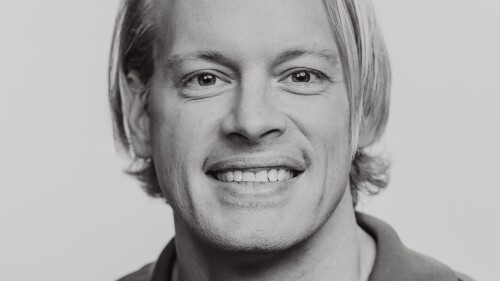
Brother From Another

Michael Holley and Vincent Goodwill discuss the “surprisingly hilarious” Tom Brady roast that included star attendees like Kevin Hart, Rob Gronkowski, Bill Belichick and more.

Vincent Goodwill explains why he believes Darvin Ham was fired as the Los Angeles Lakers head coach, while Michael Holley wonders about LeBron James’ impact on the decision.

Michael Holley and Vincent Goodwill preview Game 1 of of the New York-Indiana series, and debate whether the Knicks will be able to slow the game down vs. one of the strongest offensive teams in the NBA in the Pacers.

Michael Holley and Vincent Goodwill break down Anthony Edwards’ “adult-like” performance for the Minnesota Timberwolves vs. the Denver Nuggets, and what to expect from both teams in the rest of the series.


Local coverage

No city does the postseason quite like Boston.

Chicago’s 2024 draft class, UDFAs and more will be at Halas Hall for the first organized practices of the year.

There are veteran members of the receiving corps who will be returning in 2024, and a healthy competition for playing time will ensue amongst the remainder of the group.

Jeremiah Trotter Jr. was selected by the Eagles in the fifth round,
Latest

South Carolina sits in seventh place at the NCAA Auburn Regional, where the top five teams will advance come Wednesday evening.

The Slovenian’s overall lead remained unchanged as he let the sprinters assume the spotlight and Jonathan Milan won Stage 4 in a bunch finish.

Colts quarterback Anthony Richardson continues to rehab his surgically repaired right shoulder, but recent videos posted by the team show him throwing to teammates during the voluntary offseason program.

Travis Green takes over for interim coach Jacques Martin.

The Cardinals have agreed to terms with free agent linebacker Markus Bailey on a one-year deal, Ian Rapoport of NFL Media reports.