


Connor Rogers’ latest NFL mock draft takes a look at what he would do if he were in the GM chair for each team’s first selection.


Fri, Apr 19
8:00AM EDT
Corales Puntacana Championship - Rd 2
PGA Tour
Golf Channel


Top Headlines


Check out the top shots and moments from Round 1 of the Chevron Championship, the first women’s golf major of the year.

Natalie Esquire and Callie Lawson-Freeman talk about Beyoncé recognizing Dawn Staley and the South Carolina Gamecocks.
WATCH NOW
Alt shaped by brother's NHL, father's NFL careers
Mike Florio catches up with Notre Dame tackle and top 2024 NFL Draft prospect Joe Alt, who shares how he balanced college football with mechanical engineering, what he learned from his brother's NHL career and more.
Up Next


NBC Sports Podcasts
-
 Robbie Mustoe and Robbie Earle discuss and dissect the top Premier League storylines after every single matchweek.
 -
 15x AMA Champion Ricky Carmichael and 9x AMA Champion Ryan Villopoto recap the week in Supercross and Motocross racing.
 -
 The expert analysts of NASCAR on NBC take a deep, insightful dive into every Cup race.
 -
 Former college basketball players Meghan McKeown, Zora Stephenson, and Robbie Hummel take charge with Big Ten hoops insights.
 -
 The former QB gives his unfiltered analysis on all things NFL. Clap it up!
 -
 From spreads and totals to futures and player props, Jay Croucher and Drew Dinsick have you covered.
 -
 Join Matthew Berry and the crew for the latest information on the NFL and fantasy football.
 -
 RotoPat, Denny Carter, Kyle Dvorchak and others from the Rotoworld crew give their analysis and opinions on all things NFL.
 -
 The Rotoworld crew has you covered with top-notch fantasy baseball analysis, waiver wire pickups, latest injury news and more.
Road to Paris

The 2024 U.S. Olympic team roster of athletes updated as they qualify.

Sha’Carri Richardson makes her 2024 season debut at the first Diamond League meet in Xiamen, live on Peacock.

Emma McKeon, who won seven medals in Tokyo, plans to end her Olympic career in Paris.

World Relays take place in the Bahamas from May 4-5.

The U.S. Olympic men’s basketball team goes for a fifth consecutive title in Paris.

The 2024 Paris Olympics Opening Ceremony is July 26 with medal competition running through Aug. 11.

Simone Biles detailed her long road back from the twisties to return to the top of gymnastics.


NFL

Chargers head coach Jim Harbaugh said recently that he feels like the team will have the No. 1 overall pick in the draft if four quarterbacks go off the board to start the first round next week and that viewpoint was echoed by General Manager Joe Hortiz on Thursday.

The Lions unveiled new uniforms on Thursday, including black jerseys that they’ll wear for some home games.

It seems a given that three quarterbacks will go in the top-three picks.

Two days after Daniels was emerging as the clear favorite, things have changed.
Rotoworld

Hayden Winks of Underdog Fantasy joins Patrick Daugherty, Denny Carter and Kyle Dvorchak to assess how the NFL draft will change Brock Bowers’ fantasy football outlook and where Bo Nix stacks up in this year’s draft.

Hayden Winks joins the Rotoworld Football Show to discuss where Washington WR Ja’Lynn Polk and Texas WR Adonai Mitchell rank among the top wide receiver prospects ahead of this year’s NFL draft.

Kyle Dvorchak breaks down the potential first-round wide receivers ahead of the 2024 NFL Draft.


Matthew Berry, Connor Rogers and Jay Croucher analyze Tom Brady’s comments regarding a potential NFL return, discussing his future in media and the chances he actually gets under center again.
Premier League: The Run In

A look at the remaining schedule for Arsenal, Liverpool and Manchester City as the title race goes down to the wire.

Will Manchester City complete its quest for an unprecedented fourth-straight title?

This season’s Premier League title race is a beauty and Jurgen Klopp knows the Reds’ standards versus Crystal Palace were not good enough for silverware.

When Arsenal ran out of stream in the second half against Aston Villa on Sunday you knew what was coming. There was tension in the air amongst the home fans. They were quiet. Agitated. Frustrated.

Check out the Premier League fixtures and results for the 2023-24 season

The Premier League title race is a remarkable three horse race as we enter the final six games of the 2023-24 season.

“It’s now, the moment is now,” Arteta said after Arsenal lost to Aston Villa. “After this blow, how we react”
Golf

Bryan’s lone Tour win came at Harbour Town, site of the PGA Tour signature event.

Poston shot a 63 on Thursday at Harbour Town, while Scheffler had a 69.

Here’s a look at tee times for the second round of the PGA Tour signature event.

Check out the top shots and moments from Round 1 of the Chevron Championship, the first women’s golf major of the year.

Looking for her fifth consecutive win, Nelly Korda made a flurry of late birdies on Thursday.

Nelly Korda outlines the challenges she faced in Round 1 of the Chevron Championship and the nerves she felt to open the first major of the season.
NBA

The Nuggets and Knicks roll in their Openers

Dan Patrick talks with Adam Lefkoe about the wide-ranging implications for the Pelicans after Zion Williamson’s hamstring injury, what’s next for Golden State after its play-in loss and more.

Veteran sports betting reporter David Purdum joins Dan Patrick to dissect the fallout from the NBA’s decision to ban Jontay Porter for life after violating gambling rules.

Dan Patrick and co. react to Jontay Porter’s ban from the NBA for betting and discuss whether the league’s gambling policy is working as intended.
MLB

Chapman (0-1) was ejected by plate umpire Edwin Moscoso after Harrison Bader doubled in the eighth inning of the Pirates’ 6-3 loss to the Mets.

Legendary fireballer Randy Johnson joins Dan Patrick to revisit the time he hit a bird while pitching, how pitching has changed from his prime to the modern game and more.

Eric Samulski breaks down a few slow starters to see if it’s time for us to panic.


Jorge Montanez breaks down the week of saves across baseball in his weekly closer rankings and highlights some steals options on the waiver wire.

Premier League

The title race is coming down to the wire, with Arsenal, Liverpool and Man City watching the out-of-town results every second of every weekend from now until May 19.

Joe Prince-Wright and Nick Mendola preview Liverpool’s Matchweek 34 fixture against Fulham, where the Reds will look to rebound from their loss to Crystal Palace last weekend and keep their title hopes alive.

Joe Prince-Wright and Nick Mendola preview this weekend’s FA Cup semi finals between Manchester City v. Chelsea, and Coventry City v. Manchester United and discuss how important this trophy is for Erik ten Hag.

Joe Prince-Wright and Nick Mendola preview Arsenal’s suddenly make-or-break showdown against Wolves in Matchweek 34, where the Gunners’ season is now on the line following their Champions League exit to Bayern Munich.
Motor Sports

While Ryan Blaney seeks his first win of the year, he remains ahead of where he was at this point last year.

Four rounds remain in the 2024 SuperMotocross season and with points tied at the top, you won’t want to miss a single minute.

IndyCar driver from Florida is an avid surfer who keeps a surfboard on the West Coast

According to IndyCar’s Mark Miles, any charter system will not include guaranteed starting positions for the Indianapolis 500.
Betting

Connor Rogers joins Jay Croucher and Drew Dinsick to discuss the buzz around the Giants and Jets as they each enter the 2024 NFL Draft with a top-10 pick.

If the Jets come out of the draft with added talent at key positions of need, Connor Rogers sees potential for the Jets to surge in a reduced AFC East.

Jay Croucher and Drew Dinsick are both surprised that the Knicks don’t have better odds in their first-round NBA playoff series against the 76ers.
The Nuggets and Knicks roll in their Openers
College Basketball

AJ Storr will give Kansas an infusion of athleticism and scoring on the wing.

NCAA fast tracks rule change to make multi-time transfers immediately eligible, matching court order
NCAA athletes will be immediately eligible to play no matter how many times they transfer — as long as they meet academic requirements — after the association fast-tracked legislation Wednesday to fall in line with a recent court order.

The 6-foot-10 sophomore averaged 9.0 points and 7.2 rebounds this past season.

The former Iowa star will now try and help revive the Indiana franchise along with last season’s No. 1 pick, Aliyah Boston.
College Football

The College Football Transfer Portal is underway. Here is a one-stop shop to track which big-name players are on the move this offseason.

Defensive back Trystan Haynes (Oklahoma City, OK/ Carl Albert High School), the four-star prospect has officially accepted his invitation to the 2025 All-American Bowl.

Eric Froton breaks down the top EDGE players in the 2024 NFL Draft, headlined by UCLA’s Laiatu Latu and Alabama’s Dallas Turner.
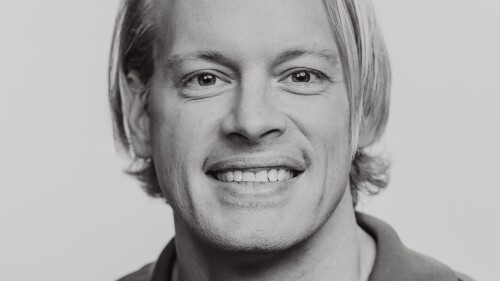

Quarterback Keelon Russell (Duncanville, TX/ Duncanville High School), the four-star prospect has officially accepted his invitation to the 2025 All-American Bowl.
Brother From Another

Now 16 seasons since his last NBA title, Brother From Another explores what narratives could form if Doc Rivers and the Milwaukee Bucks fall to the Indiana Pacers in the first round.

Michael Holley and Vinnie Goodwill react to the NCAA’s decision to put the Michigan Wolverines football program on probation, where the school also received fines for violating recruiting rules.

Michael Holley says this season’s iteration of the 76ers deserves more “respect” compared to their recent rosters ahead of Wednesday’s play-in clash with the Miami Heat.

Brother From Another explains why the Golden State Warriors dominant run is “officially over” after elimination in the play-in tournament, where Steph Curry & Co. looked “two steps behind” the Kings.


Local coverage

The C’s star opened up about his playoff mindset in an exclusive sitdown with our Chris Forsberg.

With his future hazy and subjected to educated guesses and rampant speculation, Klay Thompson spent almost 17 minutes steering discussion into his comfort zone.

The Phillies took advantage of the opportunity in front of them, beating the Rockies with starting pitching, defense and two of their better offensive nights of the season.

The Bears are poised to draft Caleb Williams with the No. 1 overall pick. After that things get hazier.
Latest

A new format also means new qualifying standards, which have Premier League clubs hoping for a fifth Champions League spot next season.

Everything old is new again.

The Lions came as close to the Super Bowl in 2023 as they ever have.

The Vikings waived offensive lineman Coy Cronk with a non-football injury designation, the team announced Thursday.

Jackson County voters rejected a sales tax extension to renovate Arrowhead Stadium earlier this month.