


The top collegiate golfers from HCBUs, HSIs and other MSIs hit the links for the final round of the NCAA PGA WORKS Collegiate Championships. Watch on Golf Channel, or the NBC Sports app!


Wed, May 08
8:00PM EDT
Chivas vs. Toluca (Español)
Peacock


Top Headlines


Michael Holley and Terrika Foster-Brasby have an in-depth discussion regarding the WNBA finally chartering flights for its teams, and discuss the influence Caitlin Clark and other stars have had in making this possible.

T-Wolves’ head coach Chris Finch joins DPS ahead of Game 3 vs. the Nuggets to discuss Anthony Edwards’ growth and Minnesota’s improved defense.
WATCH NOW
Breen: Knicks' Brunson has 'incredible work ethic'
Mike Breen joins Dan Patrick to discuss the New York Knicks' playoff series against the Indiana Pacers and how Jalen Brunson's move from Dallas to New York has been a revelation.
Up Next


NBC Sports Podcasts
-
 Robbie Mustoe and Robbie Earle discuss and dissect the top Premier League storylines after every single matchweek.
 -
 15x AMA Champion Ricky Carmichael and 9x AMA Champion Ryan Villopoto recap the week in Supercross and Motocross racing.
 -
 The former QB gives his unfiltered analysis on all things NFL. Clap it up!
 -
 The Rotoworld crew has you covered with top-notch fantasy baseball analysis, waiver wire pickups, latest injury news and more.
 -
 From spreads and totals to futures and player props, Jay Croucher and Drew Dinsick have you covered.
 -
 The expert analysts of NASCAR on NBC take a deep, insightful dive into every Cup race.
 -
 Former college basketball players Meghan McKeown, Zora Stephenson, and Robbie Hummel take charge with Big Ten hoops insights.
 -
 Join Matthew Berry and the crew for the latest information on the NFL and fantasy football.
 -
 RotoPat, Denny Carter, Kyle Dvorchak and others from the Rotoworld crew give their analysis and opinions on all things NFL.
Premier League: The Run In

A look at the remaining schedule for Arsenal, Liverpool and Manchester City as the title race goes down to the wire.

Check out the Premier League fixtures and results for the 2023-24 season

The Premier League title race is going to be an extremely tight race until the very end, as we enter the final stretch of the 2023-24 season.

Will Manchester City complete its quest for an unprecedented fourth-straight title?

Jurgen Klopp targets best finish possible and gets a little introspective as his final Liverpool games coincide with minuscule Premier League title hopes

Matchweek 36 of the Premier League sees upset bids, title ramifications, and great escape hopefuls.

“It’s an opportunity to show what you are capable of. I am really, really enjoying this challenge.”
NFL

NFL teams continue to churn the bottom of their rosters post-draft.

Lions first-round draft pick Terrion Arnold says he could have been a Raider, if the flip of a coin had gone the other way.

Daniels was the second overall pick in the draft.

All the latest information on schedule and matchups for the 2024 NFL season.


Rotoworld

Eric Samulski breaks down three pitchers who are throwing new pitches to see if we should care.


Patrick Daugherty and Denny Carter discuss the fantasy implications for rookie running backs MarShawn Lloyd with the Green Bay Packers and Jonathon Brooks with the Carolina Panthers.

The RFS crew dive into Houston Texans WR Tank Dell’s role in the 2024 fantasy football season, comparing him to teammates Stefon Diggs and Nico Collins.

Patrick Daugherty and Denny Carter analyze the Tennessee Titans wide receiver group and whether quarterback Will Levis could be the long-term solution for the franchise.
Premier League

Everton seek to extend their Premier League unbeaten run to five matches when they host reeling and relegated Sheffield United at Goodison Park on Saturday

Luton Town hope to boost their flailing safety hopes by ruining David Moyes’ last home match as West Ham United manager.

Man City haven’t lost since March and may have to stay perfect the rest of the season to seal their fourth-straight Premier League title.

Leon Osman and Owen Hargreaves take a closer look into how Liverpool were to expose Tottenham’s deficiencies in their 4-2 win over Spurs in Matchweek 36.
Golf

Damon Hack and Eamon Lynch discuss how Nelly Korda’s success on the green is spreading her influence beyond just the women’s golf sphere.

Korda turned heads at the NYC fundraiser to begin a week in which she’ll try to win a record sixth straight LPGA event, at the Cognizant Founders Cup.

Wesley and George Bryan, who have an increasingly popular YouTube channel, join Golf Today to discuss what it means to them to compete in the Myrtle Beach Classic.

Todd Lewis joins Golf Today to report on the fallout from Rory McIlroy not returning to the PGA Tour policy board, exploring what it means for Webb Simpson, the PGA Tour-PIF deal and golf’s future.

Nelly Korda discusses conditions at Upper Montclair Country Club, her Met Gala experience and how she’s preparing for the Cognizant Founders Cup while aiming for a sixth straight LPGA victory.

Short game woes added to swing issues for the former World No. 1

Motor Sports

The Sonsio GP officially kicks off racing in May at Indianapolis Motor Speedway.

Several active Cup drivers have wins at Darlington.

Michael McDowell will join Spire after having been with Front Row Motorsports since 2018.

Kyle Busch has accomplished a feat he hadn’t done since 2021.
NBA

The Suns will have one of the most expensive rosters in the league next season with Booker, Durant and Beal.

NBA officiating analyst and former referee Steve Javie shares insights with Dan Patrick on how the league’s last two-minute reports play into game transparency and reviews the officiating in recent playoff games.

We’ve got dates, times and where to watch for all the second round NBA playoff games

Brad Thomas and Vaughn Dalzell eye Isaiah Hartenstein’s rebounds and Josh Hart’s assists in Game 2 against the Pacers as they aim to turn lunch money into dinner money.
MLB

Following Steven Kwan’s trip to the injured list, Eric Samulski and Scott Pianowski debate whether managers should hold onto the hot-hitting outfielder or consider other options.

Shohei Ohtani is off to his best-hitting start of his career and Vaughn Dalzell thinks his home run leader prop is worth grabbing before it’s too late, plus a little NL MVP.
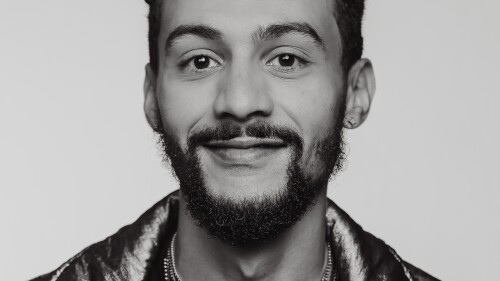

Harrison was a four-star football recruit in 2014 out of Lee’s Summit (Missouri) West High School,

Contreras was hit on the arm by a J.D. Martinez swing.
Betting

After a solid week last week, Brad Thomas is back with another round of best bets for the Wells Fargo Championship

Shohei Ohtani is off to his best-hitting start of his career and Vaughn Dalzell thinks his home run leader prop is worth grabbing before it’s too late, plus a little NL MVP.

Short game woes added to swing issues for the former World No. 1


Jay Croucher and Drew Dinsick analyze the series between the Nuggets and Timberwolves, questioning whether Denver can comeback from their 2-0 deficit against Minnesota.
College Basketball

Rated the top player available in the transfer portal, the 6-foot-6 Kadary Richmond was a first-team All-Big East selection last season.

The Big Ten announced the breakdown of conference opponents for the 18-team league. Game dates will be announced later.

Colorado adds basketball great Danny Manning to coaching staff as Buffs prepare to rejoin the Big 12
Colorado coach Tad Boyle is adding basketball great Danny Manning to his coaching staff in a reunion of former Kansas teammates.

Rienk Mast, who averaged 12.3 points and 7.5 rebounds per game, said he plans to take a medical redshirt and return in 2025-26.
College Football

The College Football Transfer Portal is underway. Here is a one-stop shop to track which big-name players are on the move this offseason.

Coach Brent Venables and the University of Oklahoma have successfully landed one of the top players in the country. 2025 All-American Trystan Haynes from Carl Albert High School in Oklahoma has committed to the Sooners.

Athlete T’Andre Waverly (Mukilteo, WA/ Kamiak High School), the four-star prospect has officially accepted his invitation to the 2025 All-American Bowl.

Wide receiver Winston Watkins Jr.
Brother From Another

Michael Holley and Terrika Foster-Brasby share their takes on the New York Knick’s playoff series against the Indiana Pacers following Game 1.

Michael Holley and Terrika Foster-Brasby share their thoughts on Pat Riley’s press conference comments on Jimmy Butler’s statements regarding the New York Knicks and Boston Celtics during the playoffs.

Michael Holley and Terrika Foster-Brasby debate over Rudy Gobert winning his fourth Defensive Player of the Year award and if Victor Wembanyama deserved the honor instead, despite being a rookie.

Michael Holley and Terrika Foster-Brasby explain just how impressive Anthony Edwards and the Minnesota Timberwolves have been against the Denver Nuggets, particularly with their defense against Jamal Murray.


Local coverage

Caleb Williams and the 2024 Bears’ path to meet expectations should be revealed next week

The Patriots are conducting their GM search at an unusual time.

As he builds the 2024 Eagles roster, general manager Howie Roseman is stockpiling draft picks that didn’t work out with other teams.

Has the NBA moved on from Warriors legend Steph Curry? Los Angeles Lakers great LeBron James? Phoenix Suns star Kevin Durant?
Latest

Austin Rivers, a former NBA player serving as an ESPN basketball analyst, made the comment this week that 30 NBA players could play in the NFL but 30 NFL players could not play in the NBA.


Benjamin Thomas won from a breakaway, sprinting to edge out Michael Valgren and Andrea Pietrobon at the end of the undulating route from Genoa to Lucca.

It was Naomi Osaka’s first victory over a top-50 player on clay since defeating Victoria Azarenka at the 2019 French Open.

Can Harry Kane and Bayern Munich secure a win over Real Madrid at the Bernabeu, or will the hosts reach yet another Champions League final?